
Journal of Liberal Arts and Interdisciplinary Sciences

1Satyam College of Education, Noida (Affiliated to SNDT Women’s University, Mumbai), Uttar Pradesh, India

Creative Commons Non Commercial CC BY-NC: This article is distributed under the terms of the Creative Commons Attribution-NonCommercial 4.0 License (http://www.creativecommons.org/licenses/by-nc/4.0/) which permits non-Commercial use, reproduction and distribution of the work without further permission provided the original work is attributed.
India and Nepal share a complex relationship rooted in deep historical and cultural ties, but recent years have witnessed significant turbulence. As a dominant power in South Asia, aspiring to become a vishwa guru [world leader], India continuously strategizes to maintain its influence in the Himalayan kingdom of Nepal. However, the growing presence of China, through initiatives like the Belt and Road Initiative, is reshaping the traditional sphere of influence that India has long held. Additionally, the involvement of other actors, such as the United States through the Millennium Challenge Corporation and other countries, further complicates Nepal’s geopolitical landscape. This research article aims to examine the ground realities of Nepal’s shifting geostrategic significance and critically assess whether the diplomatic changes highlighted in media and literature represent actual transformations or if Nepal’s strategic dynamics have largely remained unchanged.
Indo-Nepal, Anti-India, BRI, Blockade, South Asia
Introduction
The geostrategic position of Nepal has attracted the attention of not only India and China but also global superpowers. Historically, British India regarded Nepal as a vital buffer between India and Russia. The independent India continued to view Nepal as a principal buffer protecting its northern frontiers (Baral, 2023). However, the annexation of Tibet by the People’s Republic of China in 1950 effectively dissolved this natural barrier, increasing India’s vulnerability along its northern border (Muni, 2009). The India–China War of 1962 further complicated bilateral relations, exacerbating mistrust between the two nations (Maxwell, 2016). More recently, the Galwan Valley clash in June 2020, located in the far-western Ladakh region along the Line of Actual Control, has intensified tensions. Nepal’s position as the “yam between two boulders,” as described by King Prithvi Narayan Shah, underscores its strategic significance (Whelpton, 2005). For India, Nepal’s five bordering states provide natural linguistic and cultural linkages, strengthening the historical and people-to-people connections often referred to as roti–beti ka rishta [food and kinship ties]. The late President A. P. J. Abdul Kalam famously stated, “Any security threat to Nepal implies a security threat to India,” highlighting Nepal’s critical role in Indian security calculations. Prime Minister Narendra Modi’s “neighborhood-first” policy further emphasizes the strategic importance of neighboring countries like Nepal and Bhutan, which share borders with China and serve as natural buffers for India’s national security. Despite these long-standing ties, a significant segment of Nepalese society remains wary of India’s influence, often viewing Indian aid and diplomatic engagement as political interference in Nepal’s internal affairs. This perception has shaped Nepal’s foreign policy orientation toward greater diversification and assertion of autonomy. A notable example is King Mahendra’s diversification policy in the 1960s, aimed at reducing overdependence on India. His initiatives included establishing diplomatic ties with China, the USA, and other countries and hosting the first International Buddhist Conference in Kathmandu in 1962, which projected Nepal as a sovereign voice in regional religious diplomacy. Nepal’s independence in foreign policy was also evident in 1956 when it voted against the Soviet intervention in Hungary at the United Nations, distinguishing itself from Indian alignment during the Cold War (Baral, 2013).
More recently, the 2015 Indian economic blockade, imposed amid Nepal’s adoption of a new constitution, had severe economic and humanitarian consequences, leading to fuel shortages, inflation, and a decline in public sentiment toward India. This event intensified Nepal’s pursuit of a more balanced foreign policy. Former Indian External Affairs Minister Sushma Swaraj had earlier articulated the India–Nepal relationship as one between an “elder brother and younger brother,” emphasizing concern and responsibility rather than dominance, contrasting the notion of a “big brother,” which implies superiority and control. However, this framing is increasingly challenged within Nepal, as the country’s constitution declares it a sovereign entity and the Panchsheel principles outline its diplomatic framework with other countries, based on mutual respect and equality, as is customary in international law and diplomacy. Recently, the rise of anti-India sentiments within Nepal’s political discourse and public opinion has further complicated the country’s bilateral relations with India. These sentiments are a culmination of the historical grievances and the alleged intervention in Nepal’s Constitution, the drafting process, and its domestic affairs. The unofficial blockade (2015–2016), following Nepal’s promulgation of its new constitution, significantly distorted India’s benign image among the Nepalese youth and reinforced suspicions of Indian coercion. Furthermore, the media portrayal and the remarks of Indian experts have also created a rift in the relations and led them to drift toward China, thus fueling mutual distrust. This shifting dynamic has been further intensified by China’s proactive engagement in Nepal’s economic and political landscape, particularly through projects under the Belt and Road Initiative (BRI), which Nepal joined in 2017. Furthermore, the increasing Chinese investments in infrastructure, hydropower, and digital connectivity have presented Nepal with viable alternatives to Indian dependency, thereby reshaping Nepal’s foreign policy calculus, as was the case with earlier monarchs of Nepal and other political leaders, who often opted for pendulum diplomacy. Furthermore, the employment of nationalist rhetoric that portrays India as a hegemonic actor has been a viable option for its incumbent leaders to consolidate political legitimacy at home (Jha, 2020). In this context, this research seeks to explore the empirical foundations of anti-rhetoric and the xenophobic nationalism in Nepalese discourse, the media’s role in constructing these narratives, and the influence of Chinese engagement on Indo-Nepal relations. It aims to assess whether India’s traditional sphere of influence in Nepal has indeed eroded and how Nepalese perceptions of India have evolved in response to these regional shifts.
Methodology
This study employs a qualitative, empirically grounded theoretical research method. It aims to identify the persistent gap and the theoretical and practical linkages in the relations between the increasing influence of China in India’s backyard. The study will explore the perspectives of scholars well-versed in Indo-Nepal relations and the theoretical debates surrounding India–Nepal relations, especially concerning third-party concerns. The study seeks to examine the realities on the ground of the strong historical ties between two ancient civilizations, whose geographies have shaped their relationship and the complex interactions between them. The article mainly relies on primary sources gathered through field studies to understand the fault lines and China’s role in Nepal’s politics, along with secondary sources such as books, scholarly articles, newspaper reports, and other materials related to India–Nepal relations. Additionally, electronic sources like documentaries and speeches by relevant individuals have also been used in the research.
India–Nepal Relations: A Historical Context
Diplomacy is a complex social process that involves the implementation of foreign policy interests, culminating in multiple aspects that form the foundation of effective diplomatic practices. Within this context, the regional diplomacy, a strategy opted by the neighboring countries to cooperate on the diverse issues, plays an integral role in a specific region and thus becomes significant for a country’s foreign policy goals, especially for nations sharing deep-rooted historical, cultural, and geographical linkages, such as India and Nepal. While globalization has compelled states to enhance international trade and connectivity, the unique case of India and Nepal, which have long shared an open-border framework, is a century-old practice that predates many modern regional agreements concluding in today’s bilateral framework. As a result, the Indo-Nepal connection is unique, unheard of anywhere else in the world, and unique in South Asia, since it allows for the free flow of people and trade activities across borders, a benefit that is seldom encountered elsewhere. This open-border policy has nurtured deep people-to-people connections grounded in shared religious, linguistic, heritage, and cultural affinities.
Hinduism and Buddhism, two dominant religions in both countries, have significantly shaped their intertwined identities. The flow of religious philosophy and pilgrimage traditions across borders, such as the sacred sites of Lumbini (Nepal) and Bodh Gaya (India), has historically bonded the nations (Whelpton, 2005). Linguistically and ethnically, populations in India’s Bihar, Uttar Pradesh, and Uttarakhand share familial and social ties with regions in Nepal, reinforcing the civilizational continuum.
The modern diplomatic trajectory began during the British colonial era, notably with the 1923 Treaty of Friendship between British India and Nepal, which formally recognized Nepal as an independent and sovereign state. This was followed by the India–Nepal Treaty of Peace and Friendship (1950), signed shortly after India’s independence. The treaty allowed for reciprocal rights to residence, property, trade, and movement and emphasized close cooperation in defense and foreign affairs (Ministry of External Affairs, 2020). While India regards this treaty as the foundation of a special relationship, many in Nepal perceive it as an outdated agreement that reflects unequal power dynamics and compromises Nepalese sovereignty (Baral, 2013).
Calls for revision of the 1950 treaty have grown louder in Nepal in recent decades, especially as Nepal pursues a more assertive foreign policy. Critics argue that the treaty was signed under geopolitical pressure and that some clauses disproportionately favor India (Muni, 2016). Historical events have further contributed to shaping the anti-India narrative in Nepal, as India has consistently played a central role in Nepal’s political transformations. Whether it was during the anti-Rana agitation when India supported King Tribhuvan, the facilitation of the agreement between the Ranas and political parties that culminated in the Delhi Pact of 1950, or the support extended to democratic forces during the Jan Andolan of 1980–1990 (which led to the dismantling of King Mahendra’s Panchayat system), India has been a prominent actor in the Nepal’s trajectory.
India’s continued advocacy for democratic values in Nepal has often antagonized sections of Nepal’s traditional elite, namely, the Ranas and royalists, who have repeatedly portrayed India’s role as a threat to Nepal’s sovereignty and territorial integrity. Similarly, India’s mediation efforts during the 2008 negotiations between the Madhesi parties (who were agitating for a more inclusive and equitable political framework) and the Government of Nepal were also viewed with suspicion by certain political factions. With K. P. Sharma Oli’s ascent to power, anti-Indian sentiments were further mobilized and politicized, particularly in the aftermath of the 2015 border blockade, projecting himself as the tallest nationalist leader who could withstand India’s bullying tactics, thus gaining a majority in the parliament, bypassing the core government mechanism of establishing a welfare state (Amatya, 2023). Further straining bilateral ties, border disputes have resurfaced as flashpoints, most notably the Kalapani–Limpiyadhura–Lipulekh trijunction dispute. In 2019, India released a new political map that included the disputed territories as part of its Uttarakhand state, following the inauguration of a road to Lipulekh. Nepal’s political elites, disguising themselves as nationalists, denounced the purported unilateral action and demonstrated their opposition by staging protests in the country’s streets. The disillusionment escalated into a protracted battle when Nepal published a new map in May 2020 that included the contested areas inside its borders. The Nepalese parliament then approved the revised map through a constitutional change, thereby blocking the possibility of border talks for its resolution. India opposed this move, stating that the issue should be resolved through diplomatic discussions, effectively putting the matter on the back burner for future deliberation (MEA, 2020).
With Prime Minister Narendra Modi’s visits to Nepal, a symbolic act signifying the revival of ancient traditions, temple diplomacy, and promises of deeper engagement via renewed emphasis on the neighborhood, the era of new friendship as planned and predicted has not completely escaped historical inertia. Although Modi’s “Neighborhood-first” strategy sought to restore relations, obstacles, including the unofficial embargo in 2015, Nepal’s political upheaval, and the country’s growing involvement with China through the BRI, have made this goal more difficult to achieve (Jha, 2020).
Anti-India Narrative in Nepal
The anti-India sentiment in Nepal has long-standing historical and political origins, becoming especially prominent during times of political change and turmoil. Various Nepali leaders, such as Manmohan Adhikari, Pushpa Kamal Dahal “Prachanda,” and K. P. Sharma Oli, have at different points encouraged these feelings to strengthen nationalist backing and challenge India’s involvement in Nepal’s domestic matters (Jha, 2020). India’s long-standing role in Nepal’s political trajectory, ranging from support during the abolition of the Rana regime to facilitating the 2006 Comprehensive Peace Agreement, has often been portrayed not as partnership but interference (Baral, 2012). The genesis of such sentiments lies deeply in the policy framework adopted by King Mahendra, when he abolished the multiparty democracy and put forth a facade of the Panchayat system in its place. The bitter blow to democracy received huge outrage from the Nepali Congress, which was witnessing efforts to transform Nepal on the lines of the democratic model established in India. Furthermore, the remark of Prime Minister Nehru on the autocratic move of the monarch built the foundation for anti-India nationalism, as Mahendra began encouraging leftist and communist forces of various hues in Nepal. The portrayal of India’s criticism was not seen as opposition to the king’s abolition of democracy, but as anti-Nepal, perceived as a threat by India to Nepal’s sovereignty. This genesis of anti-Indian nationalism, which is evident to this day in Nepal, saw the king’s takeover, accompanied by communist and royalist forces adopting opposing views on various issues, united, however, on the plank of anti-Indian nationalism to “save” Nepal from India.
Furthermore, there was a strategic attempt to seek support from Hindu sentiment-based forces in opposition to the secular government of India (Rae, 2021). The development of stronger relationships between Hindu organizations in India and the palace and royalists, particularly the anointment of King Birendra as Vishwa Hindu Samrat by the Vishwa Hindu Mahasangha, an affiliate of the Vishwa Hindu Parishad, paved the way for Nepal’s declaration as a Hindu state under the 1962 constitution given by King Mahendra. This marked how the monarchy became deeply intertwined with the concept of a Hindu Rashtra (Rae, 2021).
Later, the “China card” as initiated by King Mahendra still holds significance in the current dynamics of Nepal’s political system, exemplified by the construction of the Friendship Highway and the settlement of the Nepal–China boundary in 1961, a step taken up by successive governments of Nepal (Chan & Bhatta, 2021). Another significant factor that remains embedded in the collective memory of India’s inclination toward intervention is the merger of Sikkim into the Indian Union by Prime Minister Indira Gandhi, a move greeted in Nepal with fear and followed by the demand for an equidistant policy between India and China, later widely pronounced as the Zone of Peace.
Most recently, fears were raised during the 2015 economic blockade, following Nepal’s adoption of a new constitution, an event that, in the shadow of Russia’s annexation of Crimea, remains a significant turning point. There remains apprehension about India’s intentions in the Terai (lowland region in parts of southern Nepal and northern India). While India denied any official embargo, the prolonged disruption of essential supplies generated intense public resentment, leading Nepal to perceive it as coercion that emphasized India’s influence on Nepal’s internal decisions and subsequently reinforced the image of India as a hegemonic and dominant power in the region (Jha, 2020). The long-drawn episode catalyzed a nationalistic discourse, reflected in campaigns such as #BackOffIndia, and is now embedded in the collective memory of Nepalese youth as a symbol of vulnerability. Territorial disputes have further aggravated these sentiments, creating a more complex situation. In 2020, Nepal released a new political map that included the contested areas of Kalapani, Lipulekh, and Limpiyadhura, regions that India also claims. This move, supported across political lines in Nepal, was seen as an assertion of sovereignty and a direct response to India’s alleged encroachments. Additionally, cultural narratives, such as debates over the birthplace of Buddha and claims about Ayodhya being in Nepal, have been politicized to distinguish Nepalese identity from Indian influence (Amatya, 2023).
India’s developmental aid and infrastructure projects, ranging from hydropower agreements like Pancheshwar to road and rail connectivity, have frequently faced implementation delays. Nepali politicians often cite these delays as evidence of India’s self-serving agenda (Muni, 2009). Similarly, Indian humanitarian assistance, such as during the 2015 earthquake, was criticized for prioritizing optics over genuine solidarity, further fueling resentment. China’s growing footprint in Nepal, particularly through the BRI, has added another layer of complexity to India–Nepal relations. China’s engagement is increasingly perceived as offering Nepal an alternative strategic partner, thereby emboldening Kathmandu to negotiate with India from a position of enhanced leverage. While India views Nepal’s tilt toward China as a geopolitical concern, many in Nepal see it as a necessary move to diversify foreign policy options and assert national autonomy (Baral, 2013).
Further straining ties, India’s Agnipath scheme, approved by the Union Cabinet on June 14, 2022, has sparked discontent in Nepal. Under this scheme, Indian youth, including Gorkhas from Nepal, are recruited into the Armed Forces for a short four-year term, after which they return without long-term pensions or benefits. This shift from the traditional 20-year service model has raised concerns among Nepalese communities reliant on military remittances and job security. Many view the scheme as diminishing the prestige and economic stability previously associated with service in the Indian Army, thereby affecting the traditional military–diplomatic bond between the two countries and diluting the loyalties of the Gorkha recruits.
Despite these tensions, the skepticism toward India’s influence, though vocally prominent, does not reflect the entire spectrum of Nepalese society. Deep-rooted historical, cultural, and religious ties, often described as the roti–beti ka rishta [a relationship of bread and daughters], continue to underpin strong people-to-people connections. However, unless key bilateral irritants such as the 1950 Treaty of Peace and Friendship, undelivered project commitments, and unresolved boundary disputes are meaningfully addressed, perceived resentment toward India is likely to persist, particularly during electoral cycles and periods of diplomatic strain, when political elites tend to invoke such issues to garner popular support.
Narrative Convergence: India-skeptic Rhetoric and China’s Rise
China’s rise has been a gradual yet steady transformation from a regional player to an assertive global power with ambitions that extend well beyond its immediate neighborhood. While US scholars like John Mearsheimer and others have long discussed China’s potential to disrupt the existing world order, its regional dominance, particularly in South Asia, is increasingly evident through its strategic outreach and economic investments. In this context, India, historically considered the dominant power in South Asia, faces significant challenges to its influence, especially in neighboring countries like Nepal. China’s assertive foreign policy, often characterized as expansionist or employing “salami-slicing” tactics, has raised global concerns, and South Asia is no exception.
Within the India–Nepal relationship, a consistent theme has emerged: the perception of a declining Indian influence juxtaposed with the rise of Chinese engagement in the Himalayan region. However, respondents had a view that the notion of China as the emerging player in Nepal is not true in its entirety; rather, the Indian dominance is still intact in Nepal.
Respondents during the field study argued that the idea of India’s diminishing sphere of influence is misleading. They pointed out that until November 2013, India accounted for approximately 80% of foreign direct investment (FDI) in Nepal. Although China has pledged large investments in recent years, especially following the BRI MoU signed in 2017, much of this remains in the form of proposed rather than realized investments. By contrast, India’s actual investment footprint continues to dominate. According to the Survey Report on Foreign Direct Investment in Nepal (2023–2024) released by the Nepal Rastra Bank (NRB), India remains the largest source of FDI stock in Nepal, accounting for 32.3% of the total  333 billion in FY 2023–2024, followed by China (10.2%). India continues to dominate realized investments (Economic Research Development, 2025). Experts, including Prakash Kumar Shrestha, former executive director of NRB, attribute India’s leading position to its long-standing investments since the 1990s, such as Unilever Nepal and Dabur Nepal, and recent large projects like the 900 MW Arun-3 Hydropower Project and the upcoming Lower Arun and Arun-4 projects by SJVN Limited. Similarly, Rajesh Kumar Agrawal, former President of the Confederation of Nepalese Industries, observed that while Chinese commitments have increased, their implementation remains limited, as FDI realization depends on factors such as investment climate, market access, and investor confidence (IANS, 2025).
Further, the Chinese businesses are not primarily investing to boost Nepal’s economy but rather to use Nepal as a manufacturing hub for exports to India, which has prompted resistance from both Indian and Western policymakers. On the question of anti-India sentiment, they emphasize that Indian media and sections of Nepal’s royalist elite have significantly contributed to shaping a negative narrative. They argue that Nepal lacks “diplomatic engineering” or a consistent and strategic diplomatic dialogue with Indian counterparts, which further reinforces public perceptions that “India does not engage,” thereby exacerbating resentment. Additionally, media portrayals have often framed Nepal as an adversary rather than a close cultural neighbor. Indian media outlets have been widely criticized for their sensationalist and insensitive reporting, as well as for what is perceived as an attempt to glorify India’s aid efforts rather than provide objective coverage of humanitarian crises. The recent Gen Z-led protests in Nepal, which culminated in a physical confrontation on September 11, 2025, underscore the growing tension in public perceptions shaped by cross-border media narratives. Findings from the field survey corroborate this pattern, revealing that many respondents perceive Indian media coverage as biased and reductive. Protesters argue that their movement has been narrowly framed as a reaction to the social media ban, while deeper structural issues, such as systemic corruption, unemployment, and elite political capture, have been largely ignored. This reflects a broader problem of media framing, where complex socio-political realities are simplified into easily consumable narratives. Concurrently, there are rising concerns within India itself over the declining credibility of news outlets and what critics describe as the “tabloidization” of media. Such trends have weakened the normative aspect of India’s soft power, as sensationalist portrayals have inadvertently reinforced critical narratives about India in Nepal’s public discourse, deepening media-induced mistrust and amplifying adversarial discourse vis-à-vis India in bilateral relations (Matters India, 2025).
Regarding China’s influence, respondents were skeptical of its long-term sustainability in Nepal. He points out that China faces challenges at the local level due to contrasting values related to freedom, democracy, culture, and human rights. While Beijing is currently involved in managing intraparty dynamics such as facilitating rapprochement among Nepal’s major communist parties, it may not be able to entrench itself deeply, given Nepal’s strong democratic ethos and cultural affinity with India. Echoing the views of S. D. Muni underscores that Nepal is not necessarily tilting toward China; rather, China is expanding globally, and South Asia, including India, is one of the many regions where this influence is manifesting (Muni, 2016). Symbolically, Karki, executive director of the Centre for Nepal and Asian Studies at Tribhuvan University, Nepal, likens India–Nepal relations to the “Saal (Shorea robusta)” tree, deep-rooted and resilient, implying that despite temporary frictions, the foundational strength of the relationship remains intact.
The dynamics of Indo-Nepal relations underwent a notable shift with the advent of Prime Minister Narendra Modi in 2014. His visit to Nepal, marked by an address to the Constituent Assembly, an unprecedented opportunity for any Indian Prime Minister, was symbolic of a renewed enthusiasm to elevate bilateral ties. The speech addressed by the PM in the Constituent Assembly of Nepal has its distinct set of correlations with the Nepalese public, hinting at the new outlook of India–Nepal relations, thus an underlying exploration on part of India in generating goodwill at both the grassroots and elite levels, thereby fostering deeper people-to-people connections and cultural coherence. Geopolitically situated between two Asian giants, given its strategic position between two major powers, it is natural for Nepal to seek support from one when the other exhibits reluctance or indifference. It is also noteworthy that while India is China’s largest trading partner, questions arise in Nepal regarding India’s reluctance to extend similar economic openness or responsiveness to China. A prime example illustrating Nepal’s contention is India’s reluctance to purchase electricity from hydropower projects that include Chinese investors or EPC contractors, a stance that Kathmandu perceives as constraining its sovereign energy choices. This reluctance has made the overall process increasingly complex and challenging. Since India remains the primary buyer of Nepalese electricity, Nepal’s efforts to negotiate a power trade agreement with China for a trans-Himalayan transmission line have been viewed with suspicion in New Delhi. Conversely, there is growing concern in Nepal that India seeks to dominate or “capture” the country’s power generation market, thereby limiting Kathmandu’s options for energy diversification (Rajan & Thakur, 2024). These dynamic underscores the intersection of energy diplomacy and strategic competition between India and China, where Nepal finds itself navigating a delicate balance between economic pragmatism and geopolitical sensitivity.
The 2015 economic blockade, widely perceived in Nepal as being orchestrated by India, significantly eroded the goodwill generated by Prime Minister Modi’s earlier diplomatic overtures. The impact of the blockade was severe, with ordinary Nepali citizens facing acute shortages of essential goods. One of the most symbolic expressions of public frustration was the formation of a 27-km-long human chain along the Ring Road in Kathmandu, led by thousands of students who united in protest against the embargo (The Kathmandu Post, 2015). This event, vividly illustrated by respondents, outlined the depth of discontent and the emotional toll the crisis took on the population. The blockade not only intensified Nepal’s dependence on Chinese alternatives but also deepened public resentment and fueled critical perceptions of India.
The renowned scholar of India–Nepal relations, Lok Raj Baral, reinforces the argument that despite shifting geopolitical dynamics marked by the rise of China as a parallel strategic partner, India’s influence in Nepal remains deeply entrenched. While developmental activities have expanded under the dual engagement of India and China, the extent of dependency on India persists. Baral emphasizes that, despite China’s growing involvement through aid in political, educational, social, and tourism sectors, it cannot substitute India’s historically embedded role. Geography continues to perpetuate India–Nepal linkages, and the deep-rooted people-to-people and cultural connections, which some term as “civilizational proximity,” cannot be replicated or eroded by China.
Moreover, China’s ambitions in Nepal, as Baral notes, are not necessarily aimed at displacing India, but are driven by its broader strategic priorities: safeguarding Tibet and countering Western influence, particularly in light of US initiatives such as the Millennium Challenge Corporation (MCC) compact. Signed in 2017 and ratified by Nepal’s Parliament in 2022, the MCC agreement entails a $500 million grant focused on electricity transmission and road development, representing the largest US grant assistance to Nepal. In parallel, other nations such as Japan, South Korea, Switzerland, and the United Kingdom have also played significant roles in Nepal’s development journey. Beyond these nations, the multilateral forum, through investments in climate-resilient infrastructure and disaster risk management, the Asian Development Bank, the International Development Association, and the Swiss Agency for Development and Cooperation aim to support Nepal in strengthening its resilience to climate impacts and ensuring that development initiatives deliver lasting benefits to communities across the country. The partner agencies have also expressed their commitment to collaborate with the Government of Nepal in developing resilient infrastructure and advancing both planned and ongoing investments, particularly in the hydropower sector within the Dudh Koshi River Basin in Koshi Province. As is often the case in Nepal’s diplomatic oscillation between long-standing partners and emerging allies, these multifaceted engagements involving various power players and stakeholders further complicate Nepal’s delicate balancing act.
Scholars frequently argue that small state syndrome, as evident in Nepal, with its positioning between two dominant powers, often experiences acute insecurity. Within this context, Indian actions are sometimes perceived through a lens of suspicion. These perceptions are rooted in Nepal’s historical concerns over its sovereignty, balancing its political domination, territorial integrity, and its precarious status as a buffer state between India and China. As a result, Nepal’s foreign policy often oscillates between seeking autonomy and managing dependency, shaping a complex trilateral dynamic in the region.
Strategic and Diplomatic Recommendations
India and Nepal have persisted through various setbacks, which have further challenged Indo-Nepal dynamics. However, the pivotal role India has played in Nepal’s political and socioeconomic aspirations, developmental projects, and even its constructive role in Nepal’s political transitions, including its evolution into a multiparty democracy and conceptualizing the idea of a republic, should not be forgotten. Thus, although misperceptions and political misalignment have strengthened negative perceptions, India has remained Nepal’s largest aid provider and shares a unique open border, enabling organic people-to-people ties unmatched elsewhere in South Asia.
Nepal, for its part, continues to express willingness to deepen relations with India. However, as observed by several scholars and stakeholders during field interviews, India’s approach, often marked by bureaucratic rigidity and a perceived “big brother” attitude, remains a source of discomfort in Nepal. This colonial-era administrative mindset needs urgent reform to reflect a modern, respectful, and cooperative bilateral outlook. Moreover, the empirical observations gathered during fieldwork in Kathmandu indicate that anti-India sentiment is not widespread among the general public. Rather, it tends to be instrumentalized by political leaders to serve domestic agendas. Issues like the border dispute, the publication of Nepal’s revised map, and narratives around sovereignty have been politically amplified, but they do not reflect a deep-rooted hostility among ordinary Nepalis.
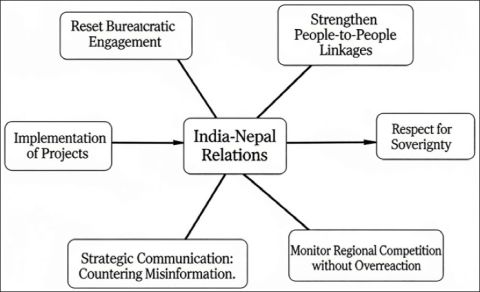
While agreeing to the emergence and the rise of China, the respondents rejected the notion of China being able to replace India in Nepal’s strategic calculus. While China’s presence has grown globally, particularly through its BRI, the key infrastructure projects it has undertaken, such as the Bhairahawa and Pokhara airports, have not achieved the desired outcomes. These airports remain underutilized due to inadequate analysis of international traffic and allegations of corruption, which have hindered their ability to attract international flights, rendering them financially unviable and signaling limited strategic utility. Furthermore, as suggested, Nepal has become increasingly cautious about the potential pitfalls of debt dependency, especially in light of the Sri Lankan debt crisis. Consequently, the narrative of Nepal drifting irreversibly into China’s orbit appears overstated and largely fueled by political rhetoric and media sensationalism, rather than grounded in realities. In light of these evolving dynamics, a recalibration and reformulation of the India–Nepal relationship spectrum is required, one that acknowledges Nepal’s sovereign choices while reinforcing India’s trusted role as a reliable partner (Figure 1).
The traditional area of influence of India, particularly throughout South Asia and notably in Nepal, remains robust. Sensitivity, respect for one another, and a move away from legacy attitudes, which have long been seen as a bureaucratic holdover, and toward future-focused diplomacy are necessary for its continued relevance. Many strategies have been proposed by academics and policy professionals to improve ties between India and Nepal. One of the main issues raised throughout the study was India’s persistent colonial bureaucratic mentality, which still influences its foreign policy strategy, particularly concerning its smaller neighbors. Apart from India’s colonial past, which has shaped its administrative practices, the relationship between India and Nepal remains vulnerable due to its hierarchical communication style, delayed decision-making, limited local consultation, alleged unequal relationship, and centralized control. These characteristics contribute to perceptions of neglect or superiority in India’s engagement with neighboring states, hence creating a sense of negative perception and harboring the same in the general public. Once a theoretical concept, the “small state syndrome” is now a reality in Nepali diplomacy, with its leadership vacillating between the desire to maintain sovereignty and the attraction of rival powers (Baral & Pyakurel, 2015). In this context, India’s engagement must reflect equality and mutual respect to bolster the relations via mutual progress and development, rather than the dominating influence that guides the foreign policy, regardless of size, and thus must be treated with dignity and parity.
Figure 1. Suggestions to Strengthen Indo-Nepal Relations.
Furthermore, India’s role in Nepal’s development must evolve into that of a facilitator rather than a gatekeeper, especially in the context of energy cooperation and regional stability (Kochhar & Ajit, 2021). The perception that India is reluctant to purchase electricity from Nepal if Chinese firms are involved in generation projects has contributed to mistrust and policy hesitations in Kathmandu. This narrative is further strengthened by India’s inconsistent engagement on the ground, which has inadvertently allowed China to expand its footprint through strategic infrastructure and energy investments (Rae, 2021). Nepal, despite possessing over 83,000 MW of untapped hydropower potential, remains severely underutilized, generating only about 2,500 MW, largely due to its financial limitations and status as a least-developed country (Rajan & Thakur, 2024). Scholars stress that such complex, multi-actor energy challenges demand mature and consistent diplomatic engagement from India (Kochhar & Ajit, 2021). A supportive Indian stance, aligned with Nepal’s developmental priorities, can prevent further divergence in bilateral ties and limit the strategic vacuum exploited by third parties like China. Leaving such issues unresolved only exacerbates geopolitical frictions and undermines India’s traditional influence in the region (Kugiel, 2016; Sandhyarani, 2011). Proactive facilitation by India in hydropower and infrastructure partnerships would not only address Nepal’s development goals but also reaffirm India’s regional leadership through cooperative rather than competitive diplomacy.
A recurring concern raised during field discussions is the bureaucratic delay in the implementation of developmental projects. While India often wins the bidding or announces aid with enthusiasm, the actual execution on the ground is marred by administrative inefficiencies, lack of coordination, and slow decision-making processes. This delay not only affects public perception but also creates space for alternative actors, particularly China, to step in with faster, more visible outcomes (Muni, 2016). There is a pressing need for attitudinal change within the Indian bureaucratic and diplomatic machinery, which must become more responsive, culturally sensitive, and delivery-oriented. A new orientation has already begun in the relations, marked by rapid strides in infrastructure development, reflected in new roads, rail, and waterway connectivity; power grids; fuel and border-crossing facilities; power exchange agreements; and a petroleum pipeline, the first of its kind in South Asia.
Additionally, effective strategic communication is essential to counter misinformation and perception gaps that frequently arise in the bilateral space. The absence of consistent top-to-bottom dialogue exacerbates mistrust and allows media narratives, often politically motivated to shape public opinion. Regular engagements at the levels of parliament, civil society, media, and academia could help neutralize these distortions and restore a trust-based atmosphere.
On the Nepalese side, persistent political instability exacerbated by power struggles within and among parties such as the Maoists has often derailed long-term engagement with India (Baral, 2023). Foreign relations have frequently been used as tools for domestic political gain, which has impeded consistent diplomatic progress. Nonetheless, only a peaceful, democratic, and economically stable Nepal can become a true partner in regional development. India’s support must therefore go beyond strategic interests and infrastructure to include capacity building, democratic strengthening, and youth-oriented programs.
Although there are vocal anti-India sentiments, personal communications during field research confirm that a large segment of the Nepali population still sees India as a culturally and economically vital partner, provided relations are based on equity and mutual dignity. However, the recurring issues of delays, lack of consultation, and perceived high-handedness fuel dissatisfaction. Therefore, a recalibrated policy approach from India should prioritize timely project completion, ensure equal diplomatic engagement, encourage people-to-people connections, and depoliticize legacy issues like the 1950 Treaty or boundary disputes. This shift, grounded in mutual respect and practical cooperation, can ensure the relationship evolves from reactive diplomacy to a proactive and enduring partnership.
Conclusion
With an emphasis on the emergence of anti-Indian narratives and China’s growing influence in Nepal’s political and developmental sphere, the study was intended to examine the fault lines in India–Nepal relations. Through field observations and a review of academic literature, it became evident that while anti-India sentiments are a real phenomenon in Nepalese discourse, these are often amplified during times of political instability or electoral mobilization, and hence do not represent a monolithic national outlook of Nepal. The general perception of the Nepalese section of society continues to value India’s cultural closeness, the familial belongingness, the open-border system, and the long-standing historical relationship. Though the public and political actors have been dissatisfied due to the loopholes in the development projects in collaboration with India, implementation and persistent delays, as well as a perceived bureaucratic and hierarchical attitude. India’s perceived relative inefficiency stems from these delays, which frequently contrast with China’s rapid and obvious infrastructure engagement. However, as this study’s analysis highlights, China’s presence is primarily transactional and strategic, lacking the emotional and sociocultural depth that India and Nepal share.
Declaration of Conflicting Interests
The author declared no potential conflicts of interest with respect to the research, authorship and/or publication of this article.
Funding
The author received no financial support for the research, authorship and/or publication of this article.
Amatya, K. (2023, May 29). Anti-Indian sentiments in Nepal. Modern Diplomacy. https://moderndiplomacy.eu/2023/05/29/anti-indian-sentiments-in-nepal/
Baral, L. R. (2012). Nepal-nation-state in the wilderness: Managing state, democracy and geopolitics. Sage Publications.
Baral, L. R. (2013). The politics of foreign policy in Nepal. Adroit Publishers.
Baral, L. R. (2023). Nepal: From monarchy to republic. Rupa Publications India Pvt. Limited.
Baral, L. R., & Pyakurel, U. (2015). Nepal–India open border: Problems and prospects. Vij Books India Pvt Ltd.
Chan, R. C. K., & Bhatta, K. D. (2021). Trans-Himalayan connectivity and sustainable tourism development in Nepal: A study of community perceptions of tourism impacts along the Nepal–China Friendship Highway. Asian Geographer, 40(1), 59–80.
Economic Research Development. (2025, September). Foreign direct investment survey 2023/24. Nepal Rastra Bank. https://www.nrb.org.np/contents/uploads/2025/09/FDI-Report-2081.pdf
IANS News. (2025). India tops in FDI stocks in Nepal. https://ianslive.in/india-tops-in-fdi-stocks-in-nepal–20250919211215
Jha, P. (2020). Battles of the new republic: A contemporary history of Nepal. Aleph Book Company.
The Kathmandu Post. (2015, November). Human chain formed around Ring Road to protest Indian blockade. https://kathmandupost.com/miscellaneous/2015/11/28/human-chain-formed-around-ring-road-to-protest-indian-blockade
Kochhar, G., & Ajit, S. (2021). India and China: Economics and soft power diplomacy. Pentagon Press.
Kugiel, P. (2016). India’s soft power: A new foreign policy strategy. Routledge.
Matters India. (2025, September). Nepal protests: Public anger at Indian media. https://mattersindia.com/2025/09/nepal-protests-public-anger-at-indian-media/
Maxwell, N. (2016). India’s China war. Pantheon Books.
Ministry of External Affairs (MEA). (2020). Press release on Nepal’s new map. Government of India.
Muni, S. D. (2009). India’s foreign policy: The democracy dimension (pp. 171–190). Cambridge University Press.
Muni, S. D. (2016). Foreign policy of Nepal. Adroit Publishers.
Rae, R. (2021). Kathmandu dilemma: Resetting India–Nepal ties. Penguin Random House India.
Rajan, K. V., & Thakur, A. K. (2024). Kathmandu chronicles: Recollections of a diplomat. Penguin Books.
Sandhyarani, S. (2011). India–Nepal relations: Historical, cultural, and political perspective. Gyan Publishing House.
Whelpton, J. (2005). A history of Nepal. Cambridge University Press.
